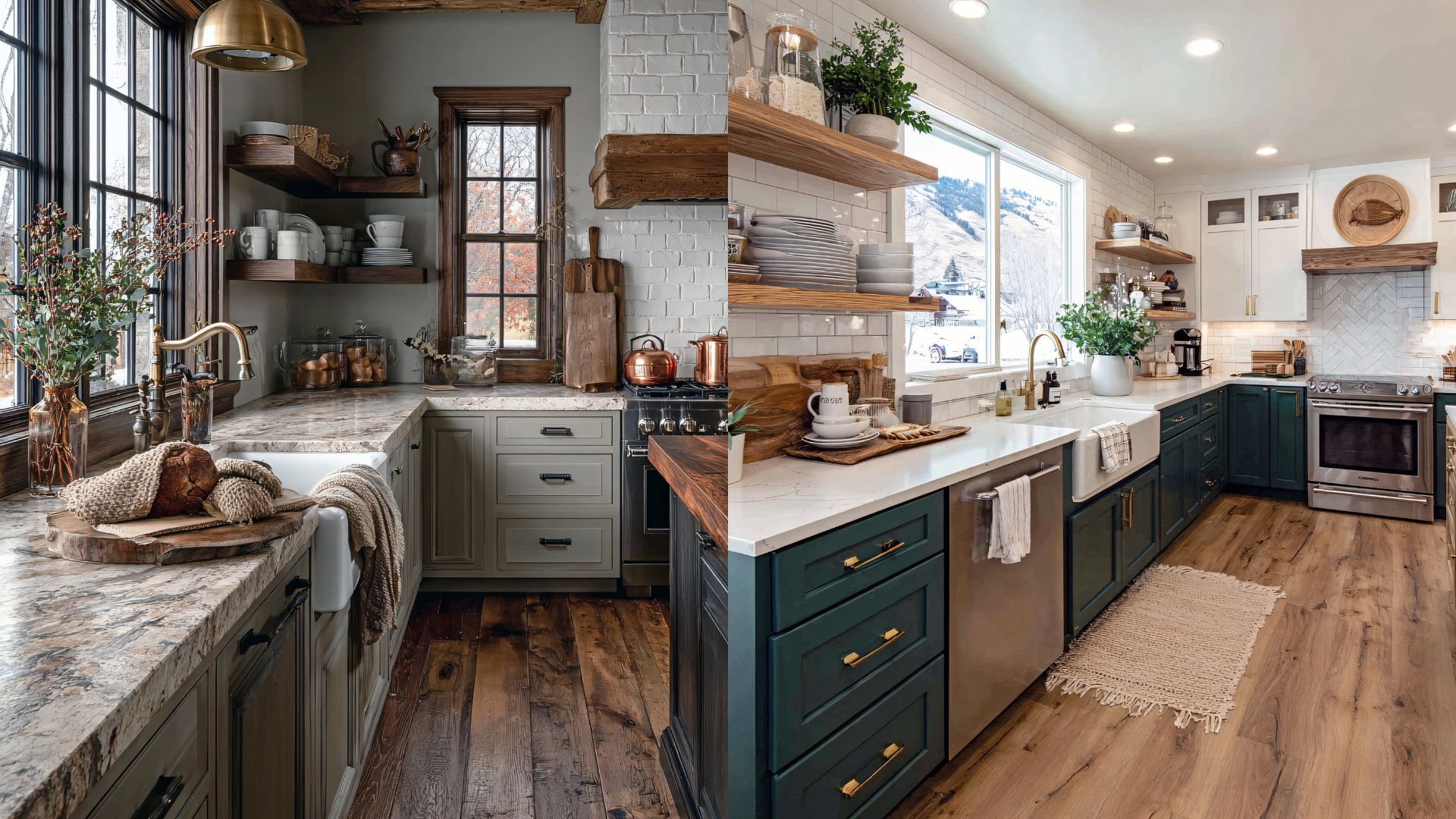
Granite is one of those materials that’s been around forever for a reason. It looks premium, it performs well, and it gives your kitchen that “real stone” vibe that engineered surfaces try really hard to imitate. But granite also comes with a few quirks, because nature doesn’t do “perfectly uniform.”
The Pros of Granite
It’s real stone, and every slab is different.
Granite is a natural material, so no two slabs are the same. If you want something that feels one-of-a-kind instead of mass-produced, granite delivers that in a big way.
It can be more affordable than quartz.
In many cases, granite is cheaper than quartz. Entry-level granite can be around $30 per square foot less, which adds up fast in a larger kitchen.
Bigger slabs = fewer seams.
Granite often comes in larger slab sizes than quartz, meaning you can reduce seams. And fewer seams usually means a cleaner, more high-end look.
It works outdoors.
Granite is a strong option for BBQ areas, outdoor kitchens, and bars because it handles the elements well and won’t fade in direct sunlight like some other surfaces can.
It handles heat like a champ.
Granite can withstand high temperatures, so putting a hot pot on it isn’t a panic moment. It’s one of the more forgiving countertop materials when it comes to heat.
The Cons of Granite
It’s porous, so it needs sealing.
Granite should be resealed every 2–5 years depending on the stone and how hard you use it. The good news: sealing is easy, and yes, regular people can do it without summoning a contractor.
The pattern can be “too much” for some people.
Granite often has movement, veining, swirls, and speckles. Some homeowners love that natural drama. Others just want calm, consistent counters and find granite visually busy.
It can have natural texture and imperfections.
Because it’s real stone, you might see small pits or fissures. Sometimes you’ll feel them when cleaning. It’s not “damage,” it’s character, but if you want perfectly smooth and uniform, this can annoy you.
It can chip on edges more easily than quartz.
Granite is durable, but it’s not as tough as quartz at the edges. Drop something heavy in the wrong spot and you can chip it, especially on sharp corners.
Bottom Line
Granite is a solid choice if you want natural beauty, heat resistance, fewer seams, and a price point that can beat quartz. Just accept the trade-offs: you’ll need occasional sealing, and you’re choosing a material that looks and behaves like a natural product, not a factory-perfect surface.